Debt 5 min read
Debit card vs credit card: what's the difference?
One spends your own money, the other borrows the bank's. That one difference changes everything about how you should use them.
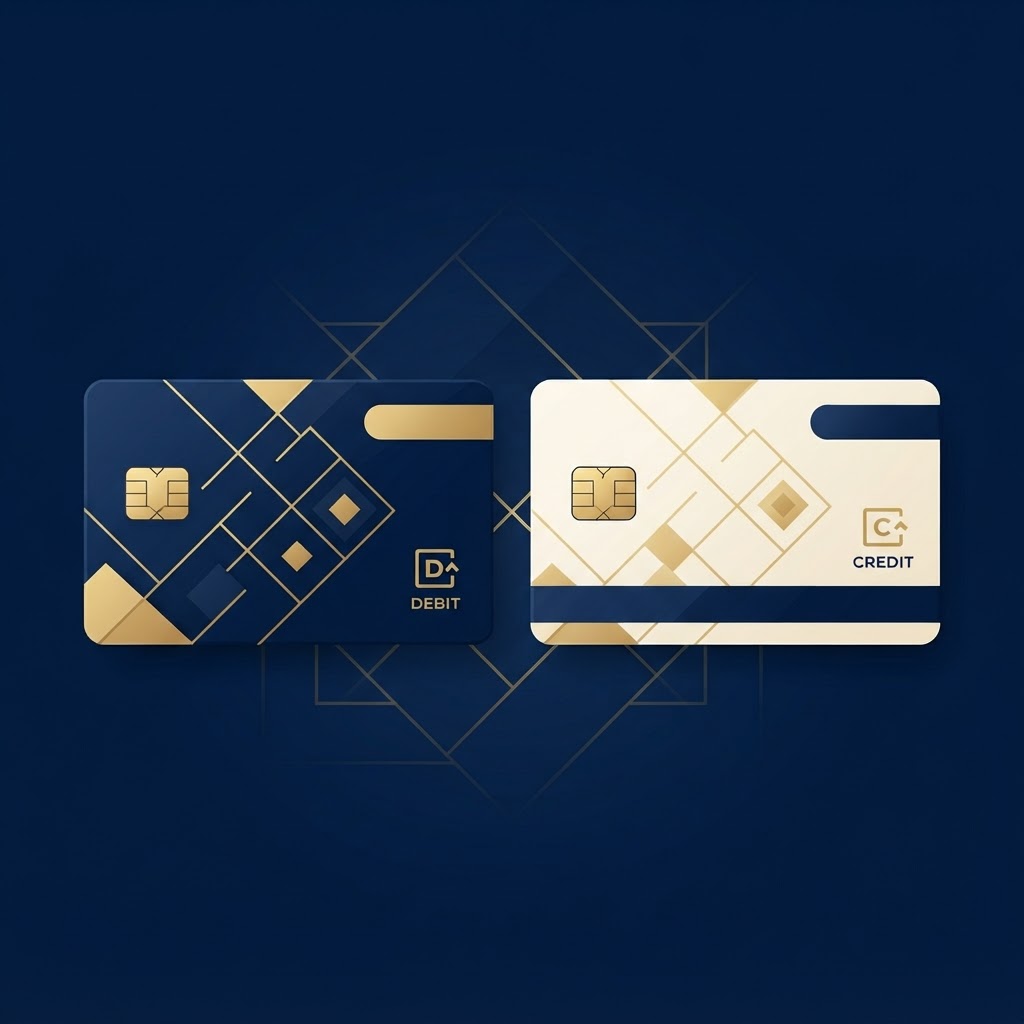
The core difference
- Debit card: When you tap, money comes straight out of your bank account. You can only spend what you have.
- Credit card: When you tap, the bank pays for you, and you pay the bank back later. You're borrowing.
Debit card
Pros
- No debt risk, you can't spend money you don't have.
- No interest charges.
- Simple and safe for daily spending.
Cons
- Doesn't build a credit history.
- Fewer rewards and protections.
Credit card
Pros
- Builds your credit score if you pay on time.
- Rewards (cashback, miles, points).
- Better fraud protection and dispute options.
Cons
- High interest (often 25%+ a year) if you don't pay in full.
- Easy to overspend and fall into debt.
- Late fees hurt your credit record.
The golden rule
If you use a credit card, pay the full balance every month. Then you get the rewards and credit-building with zero interest cost. If you can't trust yourself to do that, stick with debit.
A simple starter plan
- Start with a debit card to build spending discipline.
- Once you have steady income and track your spending, add one credit card.
- Always pay it off in full, on time.
The takeaway
Debit keeps you safe. Credit rewards discipline, but punishes carelessness. Pick the one that matches your habits right now.
Interactives
Hover any term to see its definition:
debit cardcredit cardcredit scoreinterest
debit card: A card that spends money directly from your own bank account.
credit card: A card that lets you borrow money to pay for things, which you must repay, usually with interest if not paid in full.
credit score: A number showing how reliable you are at borrowing and repaying, used by banks to decide whether to lend to you.
interest: Money paid for borrowing or saving, usually a percentage of the amount.